Was Maximus Decimus Meridius Real? Inspiration Behind Gladiator
Was Maximus Decimus Meridius Real? (Quick Answer)
No—Maximus wasn’t real. He’s a fictional character created for Gladiator. However, the film borrows from real Roman history and historical figures—especially the era of Emperor Marcus Aurelius and Commodus. Some viewers also point to the celebrated general Marcus Nonius Macrinus as a possible inspiration, though Maximus is not a direct, one-to-one match for any single person.
- Was he real? No—Maximus is fictional
- Historical era used: Marcus Aurelius → Commodus
- Possible inspiration: Marcus Nonius Macrinus (often cited)
- What’s “real” in the story: Roman politics, power struggles, and imperial history
⚡ Quick Facts — Marcus Nonius Macrinus
- 👤 Full Name: Marcus Nonius Macrinus
- 🎂 Birth Date: c. 110 AD
- 📍 Birthplace: Brescia (Brixia), Northern Italy
- 🎓 Education: Elite Roman senatorial and military training (exact details unknown)
- 💼 Occupation: Roman senator, general, suffect consul, proconsul of Asia
- 🏛️ Service Under: Emperors Antoninus Pius, Lucius Verus, and Marcus Aurelius
- ⚔️ Notable Campaigns: Germanic campaigns along the Danube frontier, including early Marcomannic conflicts
- 🏅 Honors: Suffect Consul in 154 AD and later high provincial governorships with imperial favor
- 🎬 Connection to Popular Culture: Often cited as a historical inspiration for Maximus Decimus Meridius in Gladiator (2000)
- 🧱 Archaeological Discovery: Monumental tomb uncovered in 2008 along the Via Flaminia near Rome
- 📜 Legacy: Remembered as a wealthy, successful commander and close friend of Marcus Aurelius
🏛️ Marcus Nonius Macrinus & Russell Crowe — History Meets Hollywood (Infographic)
This timeline traces the real Roman general Marcus Nonius Macrinus, his service under Marcus Aurelius, and how his life inspired Russell Crowe’s portrayal of Maximus Decimus Meridius in Gladiator (2000).
- Circa 140s AD — Birth 🍼: Marcus Nonius Macrinus is born in Brescia, Northern Italy, within the Roman Empire.
- Early Career ⚔️: Rises through the Roman military ranks, known for discipline and loyalty.
- Service Under Marcus Aurelius 🏛️: Becomes a trusted general and friend to the philosopher-emperor during the Marcomannic Wars.
- Political Honors 🎖️: Awarded the consulship, one of the highest political offices in Rome.
- Military Campaigns 🗡️: Leads successful operations against Germanic tribes, securing Rome’s northern borders.
- Historical Legacy 📜: Remembered for loyalty, military skill, and moral character — traits mirrored in Maximus’s character arc.
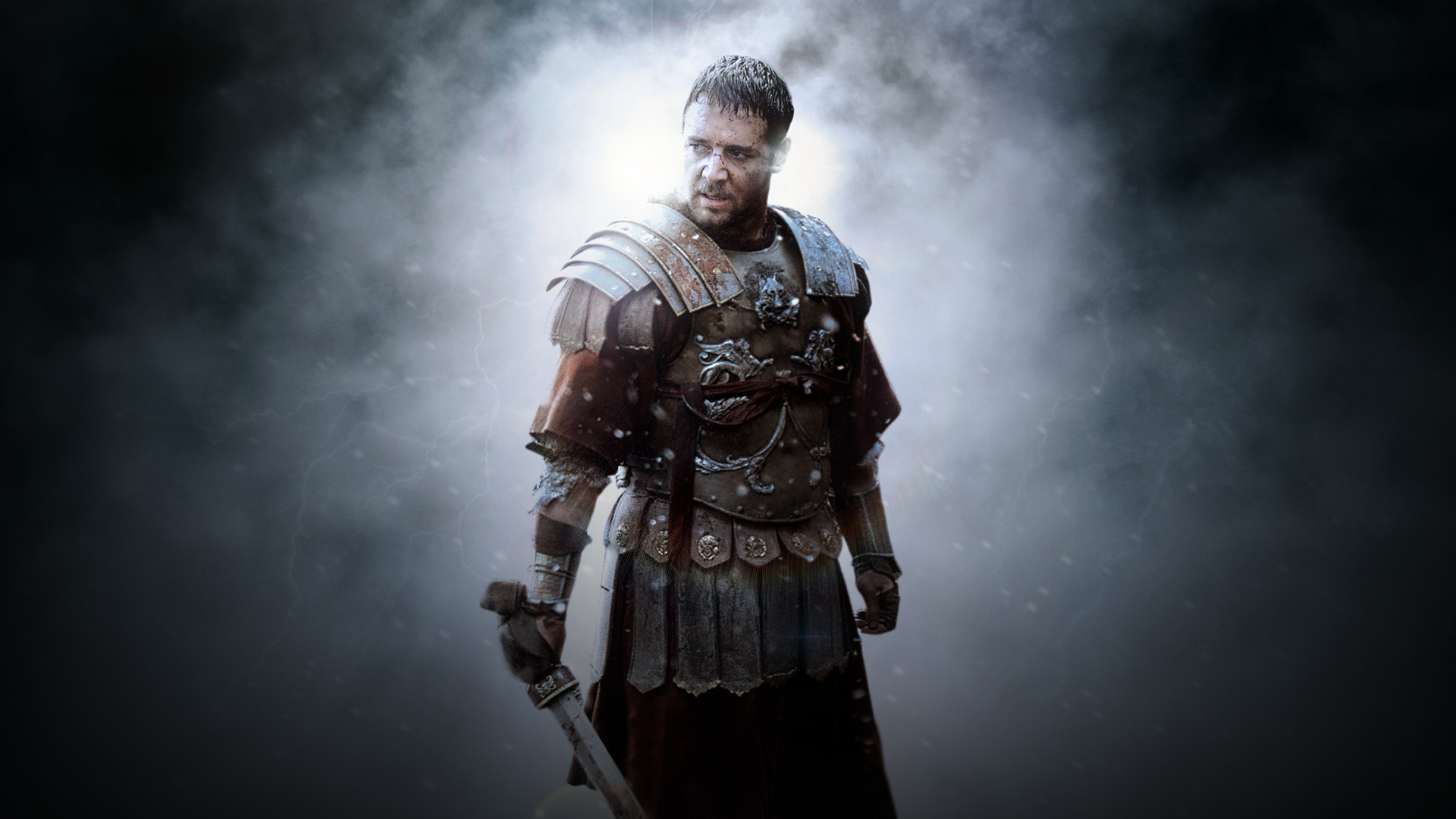
- 2000 — Hollywood Inspiration 🎬: Ridley Scott’s Gladiator draws on aspects of Macrinus’s life to shape Maximus, played by Russell Crowe.
- 2008 — Archaeological Discovery 🏺: His lavish marble tomb is unearthed near Rome, reigniting interest in the general and comparisons to Crowe’s Maximus.
- Today 🌟: Macrinus stands as an enduring symbol of honor in both historical accounts and cinematic storytelling.
🏛️ Was Maximus Decimus Meridius Real? — Gladiator’s History, Cinematography & Legacy
Short Answer: Nope — Maximus is pure Hollywood magic. But Ridley Scott didn’t just pull him out of thin air. The role is stitched together from real Roman legends — especially Marcus Nonius Macrinus, a respected general under Marcus Aurelius, and the gladiator Narcissus, who literally took down Emperor Commodus. The result? A hero that feels like he could’ve walked straight out of a history scroll… or a really good sword-and-sandals epic.
The Movie and Its Impact
When Gladiator hit theaters in 2000, it wasn’t just another historical drama — it *redefined* the epic. Directed by Ridley Scott, written by Franzoni, Logan, and Nicholson (with cinematic nods to Daniel P. Mannix’s Those About to Die), the film gave us Maximus — a general-turned-slave who fights his way back for justice. It smashed the box office ($465 million+), snagged five Oscars (including Best Picture and Best Actor), and basically cemented that we’ll never call anyone anything other than *Maximus* when we need epic vengeance.
So, Was Maximus Decimus Meridius Real?
Not exactly. There’s no dusty Roman scroll with that name on it. Maximus is a blend: the loyalty and grit of Marcus Nonius Macrinus, the lethal legend of Narcissus, and a dash of pure screenwriter flair. Early drafts even hinted at Narcissus’s direct link to Commodus’s downfall, but Scott’s final cut went for a more poetic, crowd-pleasing finale.

Historical Inspirations Behind Maximus
- Marcus Nonius Macrinus: A real-life general and confidant to Marcus Aurelius. His loyal, steadfast persona clearly inspired Maximus’s moral backbone.
- Narcissus: An actual gladiator/bodyguard who, according to historians, helped assassinate Commodus. Sure, the movie replaces assassination with a dramatic Colosseum duel—but that’s cinematic integrity for you.
Reel vs. Real: Marcus Aurelius & Commodus
Marcus Aurelius in the film feels like the emperor you’d actually follow: calm, philosophical, principled. Historically, he *was* a Stoic thinker — but there’s zero evidence he tried to sideline his own son in favor of a general.
Commodus, chillingly played by Joaquin Phoenix, *does* match the spectacle-hungry historical emperor. But in real life? No arena duel. No heroic gladiator revenge. Just political plotting, poisoned laughter, and a conspiratorial end.
Cinematography: Why It Feels So Real
One of the most fascinating bits: Ridley Scott was *inspired* to make the film after seeing a painting—Jean-Léon Gérôme’s *Pollice Verso*—which he said
spoke to me of the Roman Empire in all its glory and wickedness.. It shaped the film’s visual tone — stark, gritty, grand.
“That image spoke to me of the Roman Empire in all its glory and wickedness. I knew right then and there I was hooked.” — Ridley Scott
And Russell Crowe? He famously improvised one of Gladiator’s most quotable lines—and even based his home-description to Aurelius on his real home in Australia:
“The crew … started shooting with about 32 pages and went through them in the first couple of weeks.”
Fun Production Nuggets
Here’s a gem from behind the scenes: historian Kathleen Coleman didn’t want to be credited as a “historical consultant” because she didn’t want audiences thinking the film was meant to be historically accurate.
“Historical authenticity seems a somewhat peripheral consideration.” — Kathleen M. Coleman, former historical advisor
And yet, despite (or because of) the creative liberties, the film’s authenticity *felt* real — partly thanks to the gritty visuals, partly thanks to those above-the-line creative choices.
More Production Nuggets
- Oliver Reed died mid-shoot; the team finished his scenes using body doubles and early CGI.
- Crowe’s “ARE YOU NOT ENTERTAINED?” scene? Totally improvised during reshoots based on the energy in the Colosseum mock-up.
- They burned an entire forest (with permission) to film the Germania battle. Talk about immersive filmmaking.
Why the Composite Hero Works
Maximus isn’t real — but that’s his power. He’s composed of real valor (Macrinus), iconic revenge (Narcissus), and cinematic here-today-gone-tomorrow storytelling. He embodies Roman virtues — *pietas*, *virtus*, *fides* — not as textbook lessons, but as emotions you feel when the brass clangs and the dust finally settles.
Cultural Legacy
That’s why when historians dusted off Marcus Nonius Macrinus’s tomb in 2008 — a beautifully carved marble mausoleum north of Rome — fans lost it. It felt like stumbling on Maximus’s actual grave. History and Hollywood collided in a rare, satisfying way.
Final Word
Was Maximus Decimus Meridius real? Nope. But he’s a mosaic of real virtues, legends, and bold filmmaking. And that’s why he endures, decades later, not as memory—but as myth become flesh.
🏺 Films That Cross-Reference Major Roman Historical Figures
These well-established films weave real Roman figures and events into their stories—useful context for readers asking, “was Maximus Decimus Meridius real?”
- Spartacus (1960) — Features Spartacus, Marcus Licinius Crassus, and a young Julius Caesar amid the Third Servile War.
- Cleopatra (1963) — Dramatizes Cleopatra VII with Julius Caesar, Mark Antony, and Octavian (Augustus).
- Julius Caesar (1953) — Shakespeare’s tragedy centered on Julius Caesar, Brutus, Cassius, and Mark Antony.
- The Fall of the Roman Empire (1964) — Covers Marcus Aurelius, Commodus, and Lucilla, the same imperial moment that inspired Gladiator.
- Quo Vadis (1951) — Set under Nero; includes court figures like Petronius and Poppaea during early Christian persecution.
- Ben-Hur (1959) — Fictional lead set against Roman rule; features Pontius Pilate and imperial power under Tiberius.
- Caligula (1979) — Controversial but historical in scope; depicts Tiberius, Caligula, and Claudius.
- Agora (2009) — Late Roman world in Alexandria; centers on Hypatia with the Roman prefect Orestes and emperor Theodosius I referenced.
- The Last Legion (2007) — Fall of the West; follows Romulus Augustulus with the collapse to Odoacer.
- Centurion (2010) — Legend of the Ninth Legion; includes governor/general Julius Agricola on the northern frontier.
- The Eagle (2011) — Hadrianic Britain; pursues the lost standard of Legio IX and nods to Emperor Hadrian’s frontier.
- Antony and Cleopatra (1972) — Shakespeare on film; the power struggle among Antony, Cleopatra, and Octavian.
📘 Marcus Nonius Macrinus Biography: The Real-Life Inspiration Behind Gladiator’s Maximus
Marcus Nonius Macrinus was a distinguished Roman senator and general whose career thrived under several major emperors—Antoninus Pius, Lucius Verus, and most notably, Marcus Aurelius. Born in Brescia (Brixia) in northern Italy around 110–120 AD, Macrinus rose from his provincial origins to the highest echelons of Roman power, embodying both military prowess and political skill.
Early Life and Rise
Though few records survive from his early years, inscriptions and later honors confirm that he came from a prosperous, historically significant city. Brescia, a long-standing regional hub, likely provided young Macrinus with the education and connections necessary to enter elite circles. By around age 30, he had entered the senatorial ranks, recognized by Rome’s military and political leaders as a man of promise.
Military Achievements
Macrinus’s rise accelerated in the mid-2nd century. By 152 AD, he was appointed legate (legatus) of Pannonia Inferior—commanding legions in a province spanning parts of modern Hungary, Croatia, Serbia, and Bosnia. His leadership helped maintain stability on Rome’s northern borders during the peaceful reign of Antoninus Pius.
Between c. 159–162 AD, he was promoted to legate of Pannonia Superior, a more prestigious and strategically vital command. Here, Macrinus played a central role in defending against potential tribal incursions, further proving his reliability as one of Rome’s key frontier generals.
Political Success and Imperial Favor
In April–June 154 AD, Macrinus reached the rank of suffect consul, an esteemed office that recognized both his military record and his statesmanship. His relationship with Emperor Marcus Aurelius grew especially close during the Marcomannic Wars, a series of campaigns against Germanic tribes threatening Rome’s northern territories. Later, he was appointed Proconsul of Asia (170/171 AD), one of the most prestigious provincial governorships in the empire.
Legacy and Rediscovery
Unlike the fictional Maximus Decimus Meridius, whose life ended tragically in the Colosseum, Marcus Nonius Macrinus died honored and wealthy. In 2008, archaeologists discovered his lavish marble mausoleum along the Via Flaminia north of Rome. The tomb’s inscriptions confirmed his identity, offering a rare, tangible connection to the man who partly inspired Gladiator’s hero. To protect the structure’s fragile remains, it was reburied in 2012.


Family and Personal Life
Evidence suggests that Macrinus was married to a woman named Arria and likely maintained familial alliances with other elite Roman households, as was customary among the senatorial class.
Enduring Image
Marcus Nonius Macrinus epitomizes the archetype of the successful Roman general: brilliant strategist, loyal to his emperor, and politically astute. Though his real-life story lacked the melodrama of Hollywood’s gladiator arenas, his achievements secured his legacy—both in ancient history and in the cinematic legend of Russell Crowe’s Maximus.
🏆 Awards & Achievements — Marcus Nonius Macrinus & Russell Crowe
Marcus Nonius Macrinus — Honors & Distinctions
- Suffect Consul (April–June 154 AD) — One of the highest offices in the Roman Republic/Empire, recognizing both political and military excellence.
- Legatus of Pannonia Inferior (c. 152–154 AD) — Senior military commander tasked with safeguarding the Danube frontier.
- Legatus of Pannonia Superior (c. 159–162 AD) — Prestigious command post overseeing a volatile frontier region.
- Proconsul of Asia (170/171 AD) — Governorship of one of Rome’s wealthiest provinces, awarded only to the most trusted statesmen.
- Multiple military decorations (as indicated by inscriptions) for service during the Marcomannic Wars under Marcus Aurelius.
Russell Crowe — Awards for Gladiator (2000)
- Academy Award (Oscar) — Won: Best Actor in a Leading Role for his portrayal of Maximus Decimus Meridius.
- BAFTA Award — Nominated: Best Actor in a Leading Role.
- Golden Globe Award — Nominated: Best Performance by an Actor in a Motion Picture – Drama.
- Screen Actors Guild Award (SAG) — Won: Outstanding Performance by a Male Actor in a Leading Role.
- Multiple critics’ association awards across the U.S. and internationally recognizing his performance’s impact.
💚 Philanthropy & Community Impact Related to Gladiator
While Gladiator (2000) was primarily a commercial and artistic production, some elements of its legacy and associated personnel have contributed indirectly to philanthropic and cultural causes.
- Historical Preservation Awareness — The film’s popularity renewed global interest in Roman history, indirectly boosting museum attendance and heritage site tourism, particularly to the Colosseum, Roman Forum, and related archaeological locations. Increased tourism revenue in turn supported ongoing preservation projects managed by heritage organizations in Italy.
- Educational Tie-ins — Following the film’s success, several universities and cultural institutions organized public lectures, exhibitions, and educational programs about Roman history and archaeology. Some of these were partnered with non-profit historical societies to raise funds for research and preservation.
- Russell Crowe’s Charity Auctions — While not exclusively tied to Gladiator, Crowe has auctioned memorabilia from his films, including Gladiator props, with proceeds benefiting charities such as the Australian Children’s Music Foundation and medical research causes.
- Film Industry Support — Portions of the film’s large-scale set construction in Malta and Morocco involved local hiring, injecting funds into regional economies and fostering skills training in set design, costuming, and practical effects work.
Although there was no direct, large-scale philanthropic campaign launched by the production itself, the ripple effect of Gladiator’s cultural influence has been felt in heritage preservation, education, and charitable fundraising connected to its cast and historical themes.
✨ Three Very Interesting Facts About the Production of Gladiator
🔥 Real Fire in the Opening Battle: The Germania battle sequence used actual pyrotechnics and a real forest set ablaze to capture authentic smoke, light, and chaos—requiring strict safety coordination on set.
🖥️ CGI to Complete Oliver Reed’s Role: Actor Oliver Reed (Proximo) died before filming concluded. Filmmakers used body doubles and early CGI techniques to complete his remaining scenes, a pioneering move at the time.
⚔️ Russell Crowe Performed Many Stunts: Crowe insisted on doing much of his own fight choreography, sustaining multiple injuries during production—including a hip bone fracture—adding realism to Maximus’s weary, battle-worn presence.
🔴 Gladiator & Marcus Nonius Macrinus — 25 Question Quiz
1) Who directed Gladiator?
- Steven Spielberg
- Ridley Scott
- James Cameron
- Peter Jackson
2) Which emperor is Maximus loyal to at the start of the film?
- Marcus Aurelius
- Julius Caesar
- Hadrian
- Augustus
3) Marcus Nonius Macrinus was born in which region?
- Brescia (Brixia), Northern Italy
- Rome
- Athens
- Alexandria
4) Who played Commodus in Gladiator?
- Joaquin Phoenix
- Jared Leto
- Colin Farrell
- Christian Bale
5) In what year was Gladiator released?
- 2000
- 1999
- 2001
- 2002
6) What Roman province did Macrinus govern as Proconsul in 170/171 AD?
- Britannia
- Egypt
- Asia
- Hispania
7) Which modern country contains most of ancient Pannonia Superior?
- Hungary
- France
- Turkey
- Egypt
8) What honor did Macrinus receive in April–June 154 AD?
- Triumph
- Suffect Consulship
- Praetorship
- Censor
9) What is the name of Maximus’s home province in the film?
- Sicilia
- Hispania
- Achaea
- Gaul
10) Which real gladiator killed Commodus in history?
- Spartacus
- Narcissus
- Flamma
- Priscus
11) What award did Russell Crowe win for Gladiator?
- Academy Award for Best Actor
- Golden Globe for Best Actor
- BAFTA for Best Actor
- Emmy Award
12) Who composed the score for Gladiator?
- Hans Zimmer & Lisa Gerrard
- John Williams
- Howard Shore
- James Horner
❓ Gladiator & Marcus Nonius Macrinus: Historical and Cinematic FAQ
🎥Is Maximus Decimus Meridius a real historical figure?
No. Maximus is a fictional character created for Ridley Scott’s Gladiator, but he draws heavy inspiration from several historical Romans—most notably Marcus Nonius Macrinus, a general and close friend of Emperor Marcus Aurelius. Other influences included political themes from the reign of Commodus.
🏛️Who was Marcus Nonius Macrinus?
Marcus Nonius Macrinus (c. 110–170 AD) was a Roman senator and general from Brescia, Italy. He served as legate in Pannonia Inferior and Superior, became suffect consul in 154 AD, and later proconsul of Asia. His career spanned the reigns of Antoninus Pius, Lucius Verus, and Marcus Aurelius. Unlike the movie’s tragic hero, Macrinus died honored and wealthy, and his tomb was discovered near Rome in 2008.
🎬Did Ridley Scott base the movie directly on Macrinus?
Not exactly. The writers and Scott borrowed traits from various sources—Macrinus’s military career, the political instability of Commodus’s reign, and dramatic elements from Daniel P. Mannix’s 1958 book Those About to Die. Macrinus served more as an inspiration than a direct biography.
📜How accurate is the depiction of Commodus?
The real Commodus (reigned 177–192 AD) was known for egotism, cruelty, and participating in gladiatorial combat, though he did not kill Marcus Aurelius. In reality, Aurelius died of illness, possibly the plague, during a military campaign in 180 AD.
⚔️Were gladiators really like in the film?
Many aspects are accurate—gladiators fought in elaborate arenas, some were slaves, others volunteers, and combat was a mix of lethal and staged encounters. However, large-scale free-for-all battles and Hollywood-style duels were dramatized for cinema.
🏺What happened to Macrinus’s tomb?
Discovered in 2008 along the Via Flaminia, the marble mausoleum contained inscriptions confirming Macrinus’s identity. Due to weathering risks, it was reburied in 2012 for preservation until conservation could be ensured.
🌐Where can I learn more or support preservation efforts?
archeoroma.beniculturali.it
britishmuseum.org
smithsonianmag.com
🌍 Roman History Preservation & Support Organizations
If you’re inspired by the real history behind Gladiator and figures like Marcus Nonius Macrinus, these organizations work to protect ancient heritage and promote research:
- 🏛️ Archaeological Superintendency of Rome — Oversees preservation of Roman monuments, artifacts, and excavation sites. archeoroma.beniculturali.it
- 🗿 World Monuments Fund — Global non-profit protecting historic structures, including sites from the Roman Empire. wmf.org
- 📜 American Institute for Roman Culture — Educational non-profit producing media and resources on Ancient Rome. romanculture.org
- 🏟️ Italian Ministry of Culture (MiC) — National body supporting archaeological conservation projects in Italy. cultura.gov.it
Tip: Adding a “Donate” or “Volunteer” link for these organizations can encourage visitors to take action after reading about the historical inspirations behind the film.
📚 Gladiator Affiliate


Disclosure: As an Amazon Associate I earn from qualifying purchases.
📚 References (APA)
Historical & Archaeological
📄 Arya, D. (2014, June 30). Preserving the tomb of the Gladiator in Rome: A conversation with Dr. Darius Arya. World History et cetera. https://etc.worldhistory.org/interviews/preserving-the-tomb-of-the-gladiator-in-rome-a-conversation-with-dr-darius-arya/
📄 Beard, M. (2015). SPQR: A history of ancient Rome. Liveright Publishing.
📄 Boatwright, M. T., Gargola, D. J., & Talbert, R. J. A. (2014). The Romans: From village to empire (2nd ed.). Oxford University Press.
📄 Coarelli, F. (2014). Rome and environs: An archaeological guide (2nd ed., J. Clauss & D. Harmon, Trans.). University of California Press.
📄 Goldsworthy, A. (2009). Marcus Aurelius: A life. Yale University Press.
📄 Mellor, R. (2010). The Roman historians. Routledge.
📄 Marcus Nonius Macrinus. (2024, November 25). In Wikipedia. https://en.wikipedia.org/wiki/Marcus_Nonius_Macrinus
📄 Gladiator tomb discovered by archaeologists. (2008, October 17). History News Network. https://www.historynewsnetwork.org/article/gladiator-tomb-discovered-by-archeologists
📄 The Tomb of Marcus Nonius Macrinus. (2012, December 13). The History Blog. http://www.thehistoryblog.com/archives/21976
Film & Cultural Analysis
📄 Ridley Scott’s Gladiator and the portrayal of ancient Rome. (2020). BBC Culture. https://www.bbc.com/culture/article/20200515-how-gladiator-changed-epic-cinema
📄 Wikipedia Contributors. (2019, December 7). Gladiator (2000 film). Wikipedia. https://en.wikipedia.org/wiki/Gladiator_(2000_film)
📄 Is Gladiator based on a true story? (2021, January 19). Looper. https://www.looper.com/315516/is-gladiator-based-on-a-true-story
📄 Kumar, K. (2021, September 28). Is Gladiator based on a true story? The Cinemaholic. https://thecinemaholic.com/is-gladiator-based-on-a-true-story-2/
📄 Desiatov, S. (2022, March 26). Was Gladiator’s Maximus a real person? Historical influences explained. ScreenRant. https://screenrant.com/gladiator-true-story-maximus-decimus-meridius-real-person/
📄 Land, G. (2022, June 13). 8 historical inaccuracies from the film Gladiator. History Hit. https://www.historyhit.com/culture/historical-inaccuracies-from-the-film-gladiator/
Don’t miss our curated list of fun facts about movies—read the full article.