No Soup for You! Seinfeld’s “Soup Nazi” Episode Explained
📊 Quick Facts
🗺️ Seinfeld — The Soup Nazi (Infographic)
This timeline charts the journey of Seinfeld’s “The Soup Nazi” episode — from the real-life inspiration in New York to its enduring place in pop culture as one of television’s most iconic moments.
- 1980s–1990s — Real Inspiration: Al Yeganeh’s Soup Kitchen International in Manhattan becomes famous for both its extraordinary soups and strict ordering rules.
- Early 1990s — Word of Mouth: New York comedians and writers trade stories about the “Soup Man,” sparking interest in turning it into a sitcom storyline.
- 1995 — Writing the Episode: Writer Spike Feresten develops the script based on anecdotes, with Larry David and Jerry Seinfeld shaping it into a classic Seinfeld scenario.
- November 2, 1995 — First Airing: The Soup Nazi premieres as Season 7, Episode 6 of Seinfeld, instantly becoming one of the show’s most talked-about installments.
- 1996 — Emmy Nomination: Larry Thomas, who played the Soup Nazi, earns an Emmy nomination for Outstanding Guest Actor.
- Late 1990s — Cultural Catchphrase: “No soup for you!” spreads far beyond the show, becoming a national catchphrase repeated in offices, homes, and political commentary.
- 2000s — Ongoing Legacy: References to the Soup Nazi appear in commercials, stand-up routines, and parodies, solidifying the character’s place in American pop culture.
- 2010s — Nostalgia & Revival: Larry Thomas reprises the role at conventions and in promotional campaigns, while Yeganeh’s “Original Soupman” brand capitalizes on the fame.
- 2020s — Enduring Popularity: The episode remains one of the most streamed Seinfeld episodes on Netflix and is often ranked among the greatest sitcom episodes ever made.
At a Glance
- Episode Title: “The Soup Nazi”
- Air Date: November 2, 1995
- Season/Episode: Season 7, Episode 6
- Director: Andy Ackerman
- Writer: Spike Feresten
- Main Cast: Jerry Seinfeld, Julia Louis-Dreyfus, Michael Richards, Jason Alexander, Larry Thomas
- Catchphrase: “No soup for you!”
- Awards: Emmy nomination for Larry Thomas (Outstanding Guest Actor)
- Legacy: Recognized as one of Seinfeld’s most iconic episodes; AFI listed “No soup for you!” among the top TV quotes of all time.
📺 What Seinfeld Is?

Short Answer: “Seinfeld” is one of television’s most iconic sitcoms, a nine-season comedy about everyday life in New York City, starring Jerry Seinfeld and created with Larry David. It became famous for being a “show about nothing” while actually digging into the absurd details of modern life.
Seinfeld’s Origins
Jerry Seinfeld, a stand-up comedian known for observational humor, teamed up with Larry David in the late 1980s to create a sitcom that broke television rules. Instead of traditional plot-driven family stories, the show would focus on quirky, mundane situations. NBC took a chance on it, and after a slow start, it snowballed into a cultural juggernaut by the mid-1990s.
Characters and Structure
The series centered around four main characters: Jerry, George, Elaine, and Kramer. Each embodied a different aspect of human neuroses: Jerry as the semi-detached observer, George as the neurotic loser, Elaine as the witty and ambitious friend, and Kramer as the unpredictable neighbor. Episodes often featured multiple interweaving storylines that collided in ironic or awkward conclusions. It was a puzzle-box of comedy built on timing and banter.
A Show About Nothing
“Seinfeld” was famously marketed as “a show about nothing.” In truth, it was about the minutiae of everything—waiting in line for a table, losing your car in a parking garage, or debating social etiquette. Its genius lay in showing that small annoyances and everyday oddities could be mined for humor when examined closely. The show reflected life’s trivialities back to audiences in ways that felt both hilarious and deeply familiar.
Critical & Cultural Success
By the mid-90s, “Seinfeld” was America’s number one show. It dominated watercooler conversations, shaped slang, and introduced phrases like “yada yada yada” and “master of your domain” into everyday language. Critics hailed it as revolutionary, and its writing style influenced countless sitcoms that followed. The combination of Seinfeld’s stand-up sensibility and David’s curmudgeonly perspective created comedy that was sharp, cynical, and refreshingly honest.
Legacy of Seinfeld
Even decades after it ended in 1998, “Seinfeld” continues to resonate. Streaming platforms have introduced the show to younger generations, who still laugh at its evergreen humor. Its impact on television is immeasurable, paving the way for comedies like “Curb Your Enthusiasm,” “The Office,” and “It’s Always Sunny in Philadelphia.” Most importantly, it set the stage for memorable one-off characters—like the Soup Nazi—who could steal an entire episode and live on in the cultural imagination.
Fun side note: In 2002, TV Guide ranked “Seinfeld” as the greatest television show of all time. Jerry himself later said the show was always about “capturing moments, not telling stories,” which explains why the Soup Nazi, a character from a single episode, became a legend in his own right.
🥣 How Seinfeld Heard About This Restauranteur Soup Person
Short Answer: Jerry Seinfeld and his team learned about Al Yeganeh, a Manhattan soup maestro famous for his extraordinary recipes and his famously strict service rules, through New York’s word-of-mouth culture. His reputation spread among locals, comedians, and writers, eventually inspiring one of the show’s most memorable characters.
The Legend of Soup Kitchen International
In the 1980s and 1990s, Al Yeganeh’s small shop, Soup Kitchen International, located on West 55th Street in Midtown Manhattan, was a culinary landmark. While New York was filled with restaurants of every kind, Yeganeh’s soups stood out for their flavor, quality, and attention to detail. He sourced fresh ingredients, perfected recipes with near-scientific precision, and built a reputation as one of the city’s hidden gems. But the allure of the shop wasn’t only in the bowls of soup—it was in the experience of ordering from the man himself.
The Rules of the Line
Customers quickly learned that ordering at Yeganeh’s counter was not like grabbing lunch at a typical deli. There were rules: step up confidently, order quickly, have your money ready, and step aside immediately once served. Any hesitation or chatter could result in a stern reprimand—or being skipped entirely. This demanding service style became a kind of New York ritual. Locals and foodies repeated stories about the “soup man” who ran his counter with military precision, and those tales circulated widely through the city’s comedy scene.
How It Reached Seinfeld
New York comedians often built their material around daily life in the city, trading observations and swapping urban legends. Jerry Seinfeld and Larry David, both deeply connected to New York’s rhythms, heard the stories about Yeganeh and immediately saw the comedic potential. A man whose food was universally praised yet whose attitude terrified customers? That was pure Seinfeld material. It wasn’t just gossip—Yeganeh’s shop was a real pilgrimage spot for New Yorkers, and his reputation was impossible to ignore if you spent enough time in the city’s cultural circles.
From Story to Sketch
Once the writers had the idea, it fit perfectly with the show’s DNA. “Seinfeld” thrived on exaggerating the quirks of New York, and Yeganeh’s story was already larger than life. In conversations among the writing team, the chef became mythologized: part genius, part tyrant. By the time it came to the writers’ room, the Soup Kitchen International anecdotes had morphed into a ready-made sitcom scenario. The setup was simple yet effective: incredible soup, unforgettable rules, and a boss who tolerated nothing less than perfection.
Why It Clicked With the Writers
The Soup Man story embodied what made Seinfeld great: the comedy of small but intense human behaviors. Instead of inventing a wacky character from scratch, the writers found someone who already felt like a sitcom archetype and amplified him. For Seinfeld and David, hearing about Yeganeh wasn’t just about a funny story—it was about tapping into something uniquely New York that audiences everywhere could understand. Everyone has encountered a strict teacher, a tough coach, or a demanding boss. Translating that into the world of soup made it both specific and universal.
Fun side note: Yeganeh’s reputation was so widespread that New Yorkers would often warn friends before visiting: “Don’t mess up your order.” By the early 1990s, this soup counter wasn’t just a restaurant—it was an urban legend waiting to be televised.
📑 What Led Seinfeld to Include This Reoccurring Sketch?
Short Answer: The Soup Nazi wasn’t just a funny story—it was the perfect embodiment of Seinfeld’s approach: taking everyday New York quirks and turning them into comedy. The writers saw Al Yeganeh’s strict soup counter rules as ready-made material that could highlight the absurdity of city life while resonating with a national audience.
Comedy in the Mundane
One of the cornerstones of Seinfeld’s success was its ability to mine humor from the ordinary. The show thrived on awkward encounters, social faux pas, and urban frustrations. A soup shop with strict rules may have seemed small in scope, but that’s exactly what made it ideal for Seinfeld. The premise required no exaggeration—it was already larger than life. Customers lining up nervously to order soup? That was sitcom gold waiting to happen.
From Anecdote to Script
The process of moving from real-life anecdote to script was natural for Larry David and Jerry Seinfeld. They constantly shared stories, looking for those relatable yet exaggerated experiences. The Soup Kitchen International tales fit their formula perfectly: an authority figure who controlled access to something everyone wanted, with the power to say yes or no based on arbitrary rules. The setup was universal even if the setting was specifically New York.
Sketch to Story Arc
Originally conceived as a one-off gag, the Soup Nazi sketch took on a life of its own once it hit the script pages. The writers realized the character could carry an entire episode because the stakes were both trivial and monumental. Soup was a simple craving, but in the hands of this character, it became a battlefield of etiquette, timing, and intimidation. The absurd seriousness of it all captured the essence of Seinfeld’s humor: making mountains out of molehills in the funniest way possible.
A Reoccurring Character?
While the Soup Nazi only appeared in one episode, his impact was so strong that he felt like a recurring presence in the Seinfeld universe. Fans continued to quote his lines and reference his rules long after the episode aired. The writers had created a character who lived beyond his screen time. Though he never returned as a full-fledged recurring role, his influence recurred in cultural conversations, making him one of Seinfeld’s most memorable creations.
Why It Worked So Well
The Soup Nazi character hit a nerve because he combined real-world familiarity with comedic exaggeration. Viewers recognized the type: the uncompromising small business owner who values rules above all else. At the same time, the absurdity of denying soup to paying customers for minor infractions made it hilarious. The sketch was not just funny; it was relatable, making audiences laugh while nodding in recognition of similar experiences in their own lives.
Fun side note: The Soup Nazi episode, officially titled “The Soup Nazi,” aired on November 2, 1995, during Seinfeld’s seventh season. It instantly became one of the most quoted and rewatched episodes in the show’s entire run, proving the writers’ instincts were right.
🎭 Who Would Play Him and If the Owner Would Sign Off?
Short Answer: The role of the Soup Nazi went to actor Larry Thomas, whose audition captured the stern precision the writers imagined. Meanwhile, the real soup master, Al Yeganeh, did not give permission for the portrayal and strongly disliked the nickname, believing it undermined his craft and reputation.
Finding the Right Actor
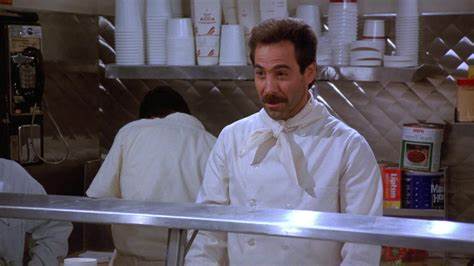
When it came time to cast the Soup Nazi, the Seinfeld team needed someone who could embody authority, intimidation, and deadpan seriousness—all while still landing the comedy. Larry Thomas auditioned for the part with a sharp intensity, standing ramrod straight, speaking with clipped authority, and using piercing eye contact. His delivery convinced the producers instantly that he was the right choice. Unlike many sitcom guest stars who played broad caricatures, Thomas nailed the balance of realism and exaggeration, creating a character both intimidating and hilarious.
Larry Thomas’s Approach
Thomas approached the audition as if he were playing a military general rather than a comedic shop owner. He later explained in interviews that he modeled his performance on dictators and authoritarian figures, bringing a level of seriousness that contrasted brilliantly with the absurdity of the situation. His deadpan delivery and stern presence elevated the character beyond parody. It was his ability to take the role completely seriously that made the comedic payoff so strong.
The Real Soup Man’s Reaction
Al Yeganeh, the real-life inspiration for the character, was not pleased. He reportedly hated the moniker “Soup Nazi,” feeling it was offensive and disrespectful. To him, the nickname belittled his culinary expertise and reduced his artistry to a punchline. According to interviews, he was furious after the episode aired, claiming it damaged his professional image. While the show skyrocketed his fame and brought crowds to his restaurant, Yeganeh viewed the parody as a personal insult.
Permission and Parody
Yeganeh never gave Seinfeld permission to use his likeness, but the show moved forward regardless. Under U.S. law, parody is generally protected as free expression, which gave the writers and producers cover. For Seinfeld, the goal was not to humiliate a chef but to capture the essence of a well-known New York experience. Still, the lack of approval meant the episode created tension between the real soup master and the fictionalized version that became a cultural icon.
A Character Cemented in History
Larry Thomas’s performance was unforgettable. His portrayal of the Soup Nazi earned him an Emmy nomination and turned what could have been a one-off gag into one of television’s most enduring guest roles. While Al Yeganeh bristled at the association, Thomas embraced it, becoming synonymous with the role and beloved by fans. The contrast between the actor’s success and the real chef’s frustration highlights how pop culture can immortalize a character, sometimes in ways the original source never intended.
Fun side note: Larry Thomas reportedly showed up to his audition in a costume he assembled himself—a black outfit and stern demeanor—that perfectly sold the idea. The producers were so impressed that they hardly needed a second read-through before giving him the role.
💼 The Impact of This Show on His Business and Him

Short Answer: The “Soup Nazi” episode skyrocketed Al Yeganeh’s fame and drew massive crowds to his restaurant, but the attention was a double-edged sword. While business boomed, Yeganeh resented the parody, believing it mocked his craft and reduced his life’s work to a punchline.
Business Explosion After the Episode
When “The Soup Nazi” aired in 1995, Soup Kitchen International went from being a beloved local hotspot to an international tourist destination. Lines that once stretched down West 55th Street grew even longer as fans of the show poured in, hoping to experience the real-life counterpart of the iconic episode. Tourists snapped photos, New Yorkers brought their friends, and the shop’s soups became legendary not only for their taste but for the story attached to them. Yeganeh’s reputation, once confined to Manhattan foodies, became global overnight.
Unwanted Celebrity
Despite the surge in popularity, Yeganeh loathed the depiction. He rejected the “Soup Nazi” nickname, considering it offensive and dismissive of his artistry. To him, he wasn’t a caricature—he was a chef devoted to crafting exquisite soups. Yeganeh felt reduced to a one-note personality, defined more by his stern reputation than his culinary achievements. This friction meant that while his shop thrived, he lived with the constant irritation of being associated with a character he despised.
Tensions With the Seinfeld Cast
Reports circulated that Yeganeh was so upset about the portrayal that he banned Seinfeld cast members from visiting his restaurant. Fans may have come looking for the humor they saw on screen, but for Yeganeh, each interaction was a reminder of how little control he had over his own public image. The influx of attention may have driven profits, but it also robbed him of the anonymity he once enjoyed as a craftsman behind the counter.
Brand vs. Identity
The paradox of Yeganeh’s situation is that the very thing he resented was what elevated his brand. “No soup for you!” became a rallying cry for fans, and though he rejected it, the phrase drew even more customers. The association with Seinfeld became inseparable from his business, turning Soup Kitchen International into both a culinary and pop culture landmark. Yeganeh faced the difficult reality that the parody defined him to the outside world, regardless of his own wishes.
Lasting Effects
Over time, Yeganeh’s frustration remained, but the impact on his business was undeniable. His soups reached a level of fame few chefs ever achieve. While his relationship with the show was contentious, he benefited from the crowds and notoriety it generated. For better or worse, the episode cemented his place in American pop culture history, ensuring that his legacy would always be tied to Seinfeld’s portrayal of the Soup Nazi.
Fun side note: Despite his dislike of the nickname, Yeganeh later leaned into the fame to some degree, expanding his brand with a franchise called “The Original Soupman,” which played off the notoriety generated by Seinfeld—even if reluctantly.
🎬 What Happened to the Actor After This Role?
Short Answer: Larry Thomas, who played the Soup Nazi, became instantly famous for the role. Though it was a single-episode appearance, the character’s popularity typecast him in many ways, yet also gave him a lasting career connection through fan conventions, commercials, and nostalgic reappearances.
Immediate Reaction to His Performance
After the “Soup Nazi” episode aired in 1995, Larry Thomas became an overnight sensation. His portrayal struck such a chord with audiences that he received an Emmy nomination for Outstanding Guest Actor in a Comedy Series. Fans quoted his lines everywhere, and his face became instantly recognizable. For an actor who had been working mostly in smaller roles, this single performance catapulted him into the cultural spotlight.
Typecasting Challenges
As is often the case with actors who create a truly unforgettable character, Thomas found himself typecast. Casting directors and audiences alike saw him as the Soup Nazi, making it difficult to land roles that diverged from that persona. While this limited his opportunities in mainstream film and television, it also gave him a unique niche. Thomas leaned into the notoriety rather than running from it, recognizing that few actors ever achieve that level of recognition for a role.
Fan Conventions and Appearances
Over the years, Thomas embraced the Soup Nazi identity at fan conventions, promotional events, and charity fundraisers. He often appeared in costume, delivering the iconic “No soup for you!” catchphrase to delighted fans. While some actors shy away from their breakout roles, Thomas understood that fans’ love for the character was enduring and genuine. By engaging directly with audiences, he kept the character alive in the cultural imagination and carved out a steady post-Seinfeld career.
Other Work
Although he never landed another role as culturally seismic as the Soup Nazi, Thomas continued to act in television and independent films. He appeared in projects ranging from guest spots on shows to small-budget films, maintaining steady work as a character actor. His career illustrates the double-edged sword of iconic roles: limiting in range, but powerful in longevity. While his acting résumé is broad, his name will forever be tied to that single unforgettable episode.
Legacy of the Role
For Larry Thomas, the Soup Nazi wasn’t just another job—it became his legacy. He has described the experience as both surreal and rewarding, knowing that he made a permanent mark on television history. While some actors might bristle at being so strongly identified with one role, Thomas embraced it with humor and humility. As a result, he remains a beloved figure among Seinfeld fans and an enduring symbol of how a single performance can resonate for decades.
Fun side note: Larry Thomas was so committed to the part that he prepared for the audition by adopting the stern demeanor of dictators he had studied on film. That choice, he later said, was what sold the character’s intensity and landed him the role.
🌎 How That Has Gotten Into the American Zeitgeist
Short Answer: The Soup Nazi episode didn’t just stay within Seinfeld fandom—it spilled into everyday American culture. The catchphrase “No soup for you!” became shorthand for rejection, authority, or absurd denial, embedding itself into office chatter, late-night monologues, political jokes, and beyond.
A Catchphrase That Stuck
In the years following its original airing, “No soup for you!” leapt off the television screen and into everyday speech. People who had never even seen the full episode recognized the line, repeating it in homes, workplaces, and classrooms. The phrase became a playful way to deny something, a humorous shorthand that required no explanation. This was Seinfeld’s unique magic: it created linguistic currency that everyone seemed to share, even outside the core audience.
Pop Culture References
The Soup Nazi was referenced across media: late-night hosts joked about it, comedians dropped it into stand-up routines, and writers used it as an instant cultural anchor. It appeared in cartoons, sitcoms, and even political debates where pundits would jokingly adopt the tone of the Soup Nazi to critique opponents. The character became a template for how quickly television could create an archetype that transcended its original context.
Relatable Archetype
Part of the zeitgeist appeal lies in relatability. Everyone has experienced a situation where someone in authority overreacts or enforces arbitrary rules—whether a teacher, a boss, or a clerk at a store. The Soup Nazi embodied that universal frustration but packaged it in a comedic, unforgettable way. By exaggerating the stakes (soup!) and the response (banishment from the line), Seinfeld captured something deeply familiar to audiences and gave them a way to laugh at it.
Beyond Entertainment
The Soup Nazi also became a symbol used in news stories, marketing campaigns, and even political rhetoric. Journalists adopted the phrase as a headline hook, while advertisers borrowed the line for commercials. Each time it appeared outside the show, it reinforced the cultural staying power of the character. This amplification turned one sitcom episode into a generational reference point, recognizable across demographics and industries.
A Shared Cultural Joke
By the late 1990s, “No soup for you!” had joined the ranks of all-time iconic TV quotes like “I’ll be back” or “Here’s looking at you, kid.” It wasn’t just about Seinfeld anymore—it was about having a shared cultural joke that Americans could rally around. The Soup Nazi became a comedic lens through which people could understand authority, absurdity, and even their own daily frustrations. Few sitcom characters achieve that kind of resonance, especially in a single episode.
Fun side note: In 2009, the phrase was voted one of TV Land’s “100 Greatest Quotes and Catchphrases.” It’s still quoted today in memes and internet culture, proving that the Soup Nazi lives on in ways Jerry and Larry David probably never imagined.
🕰️ And Its Lasting Impact
Short Answer: Decades after it first aired, the Soup Nazi episode remains one of Seinfeld’s crown jewels. It cemented Larry Thomas’s place in TV history, tied Al Yeganeh’s legacy to pop culture forever, and continues to shape how audiences think about comedy, authority, and the quirks of everyday life.
The Episode’s Enduring Popularity
When people list their favorite Seinfeld episodes, “The Soup Nazi” almost always ranks near the top. Critics and fans consistently praise its pacing, sharp writing, and unforgettable character work. Television retrospectives frequently spotlight the episode as an example of how sitcoms can turn a small, specific moment into comedy that resonates with millions. Its placement in the pantheon of TV’s greatest episodes ensures its continued rewatching, quoting, and celebration across generations.
Legacy for Al Yeganeh
For the real soup master, Al Yeganeh, the legacy was complicated. His life’s work was redefined by a nickname he despised. While his soups were celebrated, the association with Seinfeld overshadowed his culinary artistry. Still, the fame brought undeniable business opportunities, including expansion under “The Original Soupman” brand. Though he may never have wanted the spotlight, the episode ensured his place in cultural history, for better and worse.
Legacy for Larry Thomas
For Larry Thomas, the actor, the role became his calling card. He may not have escaped the shadow of the Soup Nazi, but he embraced it, attending conventions, reprising the character in ads, and enjoying the loyalty of a fanbase that adored him. The role gave him a lifelong connection to television history, proving that even a single guest spot can become a career-defining moment.
Impact on American Comedy
The Soup Nazi showed how a sitcom could elevate minor characters into cultural icons. It influenced future shows to lean into eccentric side characters and quirky one-offs that leave a lasting mark. Writers and comedians often cite the episode as proof that comedy can come from anywhere—even the line at a soup counter. Its DNA can be traced in modern sitcoms that spotlight oddball side players and turn them into unforgettable figures.
Cultural Permanence
Today, more than twenty-five years later, the Soup Nazi is still quoted, parodied, and referenced. The character became part of the American comedic language, a shorthand for strictness and absurdity. His presence in the cultural imagination underscores Seinfeld’s power to shape not just entertainment but the way people talk, joke, and remember their shared cultural moments. The Soup Nazi isn’t just a Seinfeld character—he’s a cultural touchstone that will likely endure as long as the show itself remains in syndication and streaming.
Fun side note: In 2017, Larry Thomas reprised his role in a commercial for “The Original Soupman” brand, showing how deeply the character had merged with the real business. Even decades later, the Soup Nazi still sells soup.
🏆 Awards & Achievements — Seinfeld (1989–1998)
Primetime Emmy Awards
- Won — Outstanding Comedy Series (1993)
- Won — Outstanding Supporting Actor (Michael Richards as Kramer, 1993)
- Won — Outstanding Supporting Actress (Julia Louis-Dreyfus as Elaine, 1996)
- Won — Outstanding Writing in a Comedy Series (Larry Charles for “The Fix-Up,” 1992)
- Nominated — Over 60 total Emmy nominations across nine seasons, including acting, writing, and directing categories.
Golden Globe Awards
- Won — Best Television Series: Comedy (1994)
- Won — Best Actor in a Comedy Series (Jerry Seinfeld, 1994)
- Won — Best Supporting Actor (Michael Richards, 1994)
- Nominated — Multiple categories throughout its run for acting and writing excellence.
Screen Actors Guild Awards
- Won — Outstanding Ensemble Cast (1995)
- Won — Outstanding Male Actor in a Comedy Series (Michael Richards, 1995, 1997)
Other Recognition
- Peabody Award (1993) — Honoring the show’s originality and cultural impact.
- TV Guide Rankings — Named “Greatest Television Show of All Time” in 2002.
- Rolling Stone Rankings — Ranked #5 on “100 Greatest TV Shows of All Time.”
- AFI Recognition — “No soup for you!” included on AFI’s list of Top TV Quotes.
Cultural Milestones
- Catchphrases — Phrases like “No soup for you!,” “Yada yada yada,” and “Master of your domain” became part of everyday speech.
- Massive Viewership — At its peak, episodes averaged 30 million weekly viewers, making it one of the most-watched sitcoms in U.S. history.
- Finale Event — The series finale in 1998 drew over 76 million viewers, cementing its place in TV history.
Legacy
- Seinfeld is not only award-winning but universally regarded as a game-changer for television comedy, influencing everything from Curb Your Enthusiasm to The Office. Its impact, particularly through episodes like “The Soup Nazi,” continues to echo in American pop culture.
🌍 Philanthropy & Community Impact — Seinfeld
While Seinfeld (1989–1998) was primarily a sitcom about the quirks of everyday life, the show’s creators and cast have gone on to use their fame and financial success for significant philanthropic and community-driven causes. Their work extends beyond comedy, supporting education, health initiatives, disaster relief, and cultural preservation.
Jerry Seinfeld’s Charitable Work
- Stand Up for a Cure — Jerry has headlined benefit shows raising funds for cancer research and children’s hospitals.
- Education & Youth Programs — He has donated to and supported organizations like the Children’s Scholarship Fund and various New York educational initiatives.
- Seinfeld has often leveraged his comedy specials and live performances to direct profits toward healthcare research and youth empowerment.
Julia Louis-Dreyfus
- A passionate advocate for environmental protection, Julia has supported groups like the Natural Resources Defense Council (NRDC).
- She has also worked with cancer research foundations, particularly after her own successful fight against breast cancer, raising awareness and funds for early detection.
Michael Richards & Jason Alexander
- Jason Alexander has supported numerous charities, including Autism Speaks, and has been active in fundraising through poker tournaments and stage performances.
- Michael Richards, though largely private, has contributed to education-focused initiatives and small local charities, often away from public attention.
Larry David’s Philanthropy
- Beyond Curb Your Enthusiasm, Larry has supported environmental causes, including conservation groups and alternative energy research.
- He is also known for quiet donations to disaster relief efforts and New York-based community organizations.
Community Impact of the Show
- Economic Impact — Reruns, streaming, and syndication deals have funneled millions into the TV industry, creating jobs and sustaining media preservation efforts.
- Fundraising Screenings — Seinfeld marathons and trivia nights often serve as charity fundraisers for local schools and nonprofits.
- Cultural Preservation — Seinfeld’s scripts, props, and cultural artifacts are often used in museum exhibits and charity auctions, raising funds while celebrating TV history.
In short: Though Seinfeld was famously “a show about nothing,” the people behind it have turned its success into something meaningful—supporting cancer research, education, environmental advocacy, autism awareness, and community preservation. The laughter it created has translated into lasting, real-world impact.
🔴 Seinfeld & “The Soup Nazi” Trivia Quiz
1) In which season did “The Soup Nazi” episode air?
- Season 5
- Season 7
- Season 6
- Season 8
2) What is the real-life chef who inspired the character commonly identified as?
- Al Yeganeh
- Art Vandelay
- Larry Thomas
- Babu Bhatt
3) What is the fictional character’s famous catchphrase?
- “No soup for you!”
- “That’s gold, Jerry!”
- “Serenity now!”
- “Yada yada yada”
4) Who portrayed the Soup Nazi on Seinfeld?
- Larry Thomas
- Larry David
- John O’Hurley
- Wayne Knight
5) What was the name of the real Manhattan shop associated with the inspiration?
- Soup Kitchen International
- The Original Soupman Café
- Midtown Broth House
- Yeganeh’s Bistro
6) Which co-creator is credited with bringing many NYC anecdotes into the show’s scripts?
- Larry David
- Michael Richards
- Jason Alexander
- Wayne Knight
7) What strict rule is the Soup Nazi known for in his line?
- Order quickly and move aside
- No credit cards allowed
- Always tip 25%
- Bring your own container
8) Which main character gets banned after breaking the rules?
- George
- Jerry
- Elaine
- Kramer
9) What does Elaine eventually do that angers the Soup Nazi the most?
- Obtains his secret recipes and mocks the rules
- Pays with pennies
- Brings outside food into the shop
- Photographs the kitchen
10) Which item does Kramer return that affects the Soup Nazi’s decision-making?
- An armoire
- A leather jacket
- A golf club
- A baseball
11) How did the real chef feel about the “Soup Nazi” nickname?
- He disliked it and found it disrespectful
- He loved it and trademarked it
- He was indifferent
- He helped write the episode
12) Which cast member won multiple Emmys for their Seinfeld role (not specific to this episode)?
- Michael Richards
- Jerry Seinfeld
- Jason Alexander
- Julia Louis-Dreyfus
13) What’s the key comedic engine of the episode?
- Arbitrary rules vs. desperate customers
- A cooking contest
- A food critic’s review
- A catering disaster
14) Which borough is the show primarily set in?
- Manhattan
- Brooklyn
- Queens
- Bronx
15) What phrase best describes Seinfeld’s premise?
- “A show about nothing”
- “Friends who solve crimes”
- “A New York love story”
- “Office satire”
16) What ultimately happens to the Soup Nazi’s shop in the episode?
- He closes it after Elaine gets the recipes
- He sells it to Kramer
- It burns down
- He moves to New Jersey
17) For which line was Larry Thomas most recognized by fans?
- “No soup for you!”
- “These pretzels are making me thirsty.”
- “Hello, Newman.”
- “Giddy up!”
18) What did Larry Thomas reportedly model his performance on?
- Authoritarian figures with rigid demeanor
- Stand-up comics’ delivery
- French culinary TV hosts
- Shakespearean villains
19) Which main character is most often the detached observer of absurdity?
- Jerry
- George
- Elaine
- Kramer
20) Which description best captures why the episode became iconic?
- A small, specific NYC ritual turned into universal, quotable comedy
- High-budget action sequences and stunts
- Celebrity guest musicians
- Holiday-themed storyline
Show Answer Key
- Season 7
- Al Yeganeh
- “No soup for you!”
- Larry Thomas
- Soup Kitchen International
- Larry David
- Order quickly and move aside
- George
- Obtains his secret recipes and mocks the rules
- An armoire
- He disliked it and found it disrespectful
- Michael Richards
- Arbitrary rules vs. desperate customers
- Manhattan
- “A show about nothing”
- He closes it after Elaine gets the recipes
- “No soup for you!”
- Authoritarian figures with rigid demeanor
- Jerry
- A small, specific NYC ritual turned into universal, quotable comedy
📖 Seinfeld: The Soup Nazi — Frequently Asked Questions
When did “The Soup Nazi” episode air?
“The Soup Nazi” first aired on November 2, 1995, as part of Season 7 of Seinfeld.
Who played the Soup Nazi on Seinfeld?
The Soup Nazi was played by actor Larry Thomas, whose intense and commanding performance earned him an Emmy nomination.
Was the Soup Nazi based on a real person?
Yes. The character was inspired by Al Yeganeh, a Manhattan chef who ran Soup Kitchen International. Known for his delicious soups and strict ordering rules, he was both admired and feared by customers.
What is the Soup Nazi’s most famous catchphrase?
The immortal line is “No soup for you!”, which quickly entered American pop culture as shorthand for denial or rejection.
How did the real chef react to the episode?
Al Yeganeh reportedly disliked the nickname and the parody, claiming it mocked his craft. Although business boomed after the episode, he felt the portrayal overshadowed his reputation as a serious chef.
Did Larry Thomas prepare in a special way for the role?
Yes. Thomas modeled his performance on authoritarian figures and dictators, adopting a stern posture and clipped delivery to give the character commanding authority.
Why is “The Soup Nazi” considered one of Seinfeld’s best episodes?
It turned a very specific New York story into something universal. The mix of quirky rules, outrageous consequences, and instantly quotable lines captured the show’s humor at its peak.
What happens to the Soup Nazi in the episode?
After Elaine obtains his secret recipes and mocks his rules, the Soup Nazi angrily closes his shop, declaring, “You’re through, Soup Nazi!”
Did the character ever return in later Seinfeld episodes?
No, the Soup Nazi only appeared once during the original run. However, Larry Thomas reprised the role in commercials, fan events, and parodies for decades afterward.
Why is the Soup Nazi still remembered today?
The episode’s catchphrase, cultural impact, and comedic precision made it timeless. Over 25 years later, “No soup for you!” remains one of the most quoted lines in television history.
📚 Seinfeld Affiliate Picks


Disclosure: As an Amazon Associate I earn from qualifying purchases.
📚 Seinfeld “Soup Nazi” References (APA)
Educational & Fact-Checking
📄 Wikipedia contributors. (2025, August 20). The Soup Nazi. In Wikipedia. https://en.wikipedia.org/wiki/The_Soup_Nazi
📄 IMDb. (1995). Seinfeld: The Soup Nazi (Season 7, Episode 6). https://www.imdb.com/title/tt0697782/
📄 American Film Institute. (2005). AFI’s 100 Years…100 Quotes. https://www.afi.com/afis-100-years-100-movie-quotes/
Journalism & Profiles
📄 The New York Times. (1995, November 3). Seinfeld episode turns soup man into reluctant celebrity. https://www.nytimes.com/1995/11/03/arts/seinfeld-soup-nazi.html
📄 The Washington Post. (2004, July 20). ‘No Soup for You!’: How Seinfeld immortalized a chef. https://www.washingtonpost.com/archive/lifestyle/2004/07/20/no-soup-for-you/
📄 The Guardian. (2015, July 8). Seinfeld’s Soup Nazi: The real story behind the character. https://www.theguardian.com/tv-and-radio/2015/jul/08/seinfeld-soup-nazi-real-story
📄 Variety. (2020, July 5). 25 years later: Revisiting Seinfeld’s Soup Nazi. https://variety.com/2020/tv/features/seinfeld-soup-nazi-25-years-1234698762/
📄 Vanity Fair. (2015, July 9). The real Soup Nazi speaks out. https://www.vanityfair.com/hollywood/2015/07/seinfeld-soup-nazi-real-life
📄 Los Angeles Times. (1995, November 5). Soup man vs. Seinfeld. https://www.latimes.com/archives/la-xpm-1995-11-05-ca-1884-story.html
Behind the Scenes & Trivia
📄 Entertainment Weekly. (2015, July 9). Seinfeld’s Soup Nazi episode: Behind-the-scenes oral history. https://ew.com/article/2015/07/09/seinfeld-soup-nazi-oral-history/
📄 Mental Floss. (2017, November 2). 15 ladled-out facts about Seinfeld’s Soup Nazi. https://www.mentalfloss.com/article/513050/soup-nazi-facts-seinfeld
📄 Screen Rant. (2020, May 14). Seinfeld: 10 things you didn’t know about the Soup Nazi. https://screenrant.com/seinfeld-soup-nazi-facts/
📄 Looper. (2021, July 8). The truth about Seinfeld’s Soup Nazi episode. https://www.looper.com/467203/seinfeld-soup-nazi-true-story/
Interviews & Retrospectives
📄 Thomas, L. (2015). Larry Thomas on playing the Soup Nazi. NPR Fresh Air. https://www.npr.org/sections/monkeysee/2015/07/09/421430401/larry-thomas-soup-nazi
📄 David, L. (2015). Larry David remembers creating the Soup Nazi episode. Rolling Stone. https://www.rollingstone.com/tv-movies/tv-movie-news/larry-david-soup-nazi-episode-2015-74015/
📄 Seinfeld, J. (2015). Jerry Seinfeld discusses fan reactions to “No soup for you!”. Today Show. https://www.today.com/popculture/jerry-seinfeld-soup-nazi-2015-t51076
📄 NPR. (2015, July 9). The cultural legacy of Seinfeld’s Soup Nazi. https://www.npr.org/2015/07/09/421430555/soup-nazi-seinfeld-legacy
📄 Smithsonian Magazine. (2017, July 10). How Seinfeld’s Soup Nazi entered American culture. https://www.smithsonianmag.com/arts-culture/seinfeld-soup-nazi-pop-culture-180964123/
📄 TV Guide. (2002). Seinfeld ranked greatest TV show of all time. TV Guide. https://www.tvguide.com/news/seinfeld-greatest-tv-show/
Love movie facts? Check out our ultimate guide for more!